

Massive blackout cuts electricity to 5 million island wide

Electricity has been entirely restored following a massive power blackout that left some five million Cubans in the dark — but many serious questions remain.
The apagón, which struck Sep. 9 at 8:09 p.m., just as the evening TV news was starting, blacked out a huge swath of Cuba from Pinar del Río in the extreme west to Villa Clara in the center of the island.
Authorities didn’t say why it happened, issuing only a 66-word communiqué blaming an “interruption” in a high-voltage line Ciego de Avila, 250 miles east of Havana.
That 220-KV line runs 100 miles along the axis of the island. The line, from Santa Clara to Ciego de Avila, is supported by 700 to 800 steel towers spaced 1,200 to 1,800 feet apart.
The main transmission power lines (namely the 220KV line) were built in the late 1970s and early 1980s, yet Cuba’s power infrastructure is neglected and frequently battered by hurricanes. It’s also easy prey for thieves; recently a tower collapsed after local residents stole metal parts for other uses — a fairly common occurrence in Cuba.
Several months ago, Havana’s old Campoamor theater collapsed, the day after people stole interior wooden beams that were supporting damaged structures. The same happened when a multistory dwelling collapsed in Havana, killing three or four students.
The blackout — which affected residents of Pinar del Río, Artemisa, Havana, Mayabeque, Cienfuegos, Matanzas, Villa Clara, Sancti Spíritus and Ciego de Avila provinces — highlights the weakness of Cuba’s power infrastructure. But it also a rapid-reaction capacity of engineers and technicians, as authorities began to re-establish power within only a few hours.
Miami’s Spanish-language El Nuevo Herald reported that “brief blackouts also were reported at different times in the eastern provinces of Santiago de Cuba and Camagüey, and it was not clear if they were linked to the outage in western Cuba.”
The newspaper noted that Toronto-based Sherritt International Corp., Cuba’s largest private foreign investor, warned in February that it its share of the island’s electricity generation would drop by 11% this year.

The Herald reported that massive blackouts hit Cuba repeatedly in the first half of the 1990s, after the collapse of Soviet subsidies cut the supplies of fuel and spare parts for Cuba’s generating plants.
Subsidized petroleum sent by Venezuelan President Hugo Chavez has largely covered the shortages since then.

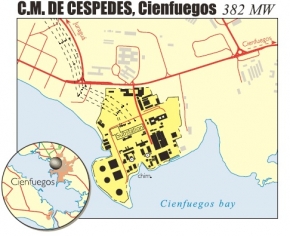
For more details on Cuba's aging National Electric System and maps of all the island's key power plants, consult our special report in the May 2012 issue of CubaNews
Don't miss out
Become a Digital Subscriber and continue to access all the exclusive and insightful reporting you'll only find in Cuba News.
Subscribe Now - Get 30 days Free



Comments